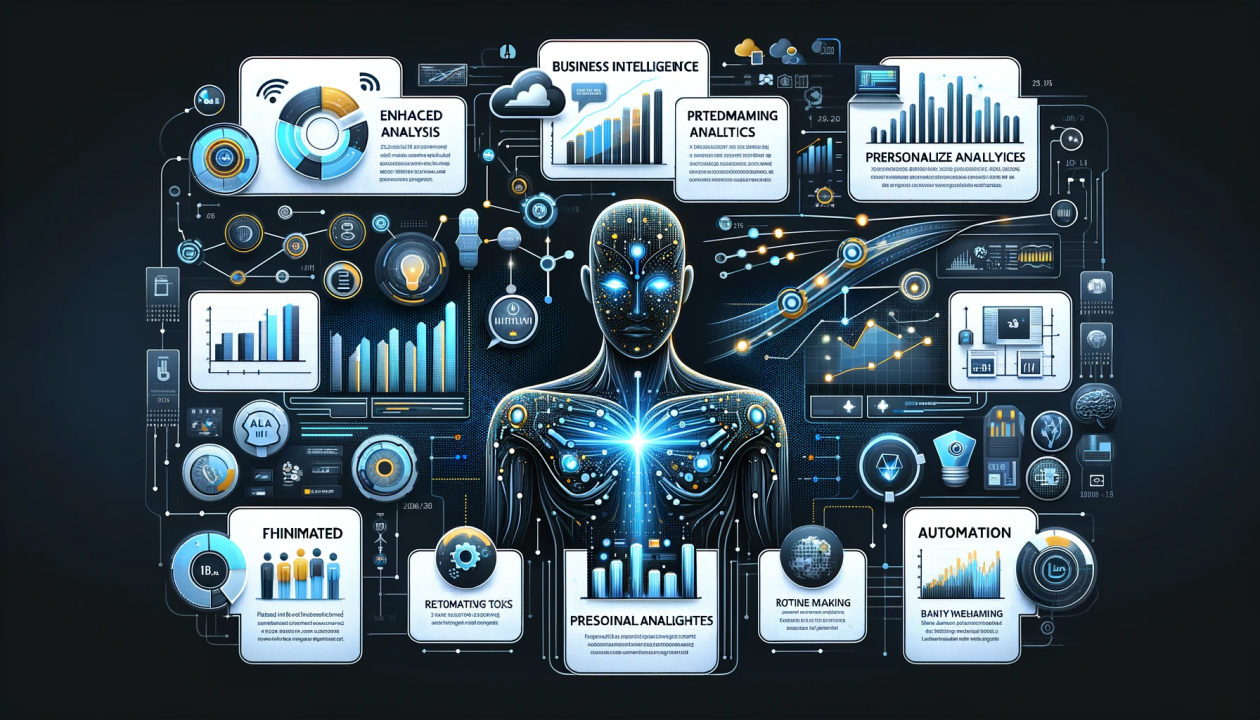
Artificial intelligence has become one of the most transformative technologies for organizations of every size. From automating repetitive tasks to analyzing large volumes of data, AI for business is helping companies improve efficiency, reduce operational costs, and make better decisions. Whether you’re a startup, a growing company, or a large enterprise, AI-powered tools can streamline workflows and create new opportunities for innovation.
Businesses across industries are adopting AI to improve customer experiences, strengthen cybersecurity, optimize supply chains, and increase employee productivity. As AI technology continues to evolve, organizations that understand its capabilities are better positioned to remain competitive in an increasingly digital marketplace.
This guide explains everything you need to know about AI for business, including its benefits, real-world applications, implementation strategies, challenges, and future trends.
What Is AI for Business?
AI for business refers to the use of artificial intelligence technologies to improve business operations, automate processes, analyze data, and support decision-making.
AI systems can perform tasks such as:
- Data analysis
- Predictive forecasting
- Customer support
- Process automation
- Document processing
- Content generation
- Image recognition
- Fraud detection
Instead of replacing employees, AI often works alongside teams by handling repetitive work and providing insights that support better decisions.
Why Businesses Are Adopting AI
Organizations invest in AI because it helps solve common business challenges while improving overall efficiency.
Key reasons include:
- Increased productivity
- Faster decision-making
- Better customer experiences
- Lower operating costs
- Improved data analysis
- Competitive advantage
- Enhanced operational efficiency
These benefits make AI valuable across many industries.
Benefits of AI for Business
Businesses implementing AI may experience several important advantages.
Improved Productivity
AI automates repetitive tasks, allowing employees to focus on strategic and creative work.
Better Decision-Making
AI analyzes large datasets quickly, helping business leaders identify trends and make data-driven decisions.
Enhanced Customer Service
AI-powered chatbots and virtual assistants provide fast responses to common customer questions, improving service availability.
Cost Savings
Automation can reduce manual workloads, minimize errors, and improve operational efficiency over time.
Personalization
AI helps businesses deliver personalized recommendations, targeted marketing campaigns, and customized customer experiences.
Common Applications of AI for Business
AI is used in many business functions.
Customer Support
Businesses use AI to:
- Answer frequently asked questions
- Route customer inquiries
- Provide 24/7 assistance
- Improve response times
Marketing
AI supports marketing by:
- Analyzing customer behavior
- Personalizing campaigns
- Generating content ideas
- Improving advertising performance
- Optimizing email marketing
Sales
Sales teams use AI to:
- Identify qualified leads
- Forecast sales
- Analyze customer interactions
- Improve conversion strategies
Human Resources
HR departments benefit from AI through:
- Resume screening
- Employee onboarding
- Workforce planning
- Learning recommendations
- Performance analysis
Finance
Financial teams use AI for:
- Fraud detection
- Risk analysis
- Budget forecasting
- Invoice processing
- Financial reporting
Supply Chain Management
AI helps optimize:
- Inventory management
- Demand forecasting
- Logistics planning
- Warehouse operations
- Delivery scheduling
Industries Using AI
Many industries benefit from AI for business.
These include:
- Healthcare
- Retail
- Manufacturing
- Banking
- Insurance
- Education
- Transportation
- Hospitality
- Real estate
- Technology
Each industry applies AI in ways that improve efficiency and customer experiences.
How to Implement AI Successfully
Businesses considering AI should follow a structured approach.
Identify Business Goals
Start by defining the specific problems AI should solve.
Evaluate Current Processes
Identify repetitive or data-intensive tasks suitable for automation.
Choose the Right AI Tools
Select solutions that match business needs, budget, and existing systems.
Train Employees
Employees should understand how AI supports their work and how to use new tools effectively.
Monitor Performance
Measure outcomes regularly and refine AI implementations based on business objectives.
Challenges of AI Adoption
Although AI offers many benefits, businesses should also consider potential challenges.
Common considerations include:
- Data quality
- Privacy and security
- Employee training
- Integration with existing systems
- Initial implementation costs
- Ethical use of AI
Addressing these challenges early helps organizations maximize long-term value.
Best Practices for Using AI
Organizations can improve AI adoption by following several best practices.
- Define clear objectives.
- Use reliable, high-quality data.
- Maintain human oversight for important decisions.
- Protect customer privacy.
- Regularly evaluate AI performance.
- Update systems as technology evolves.
Responsible implementation builds trust while improving business outcomes.
Future of AI for Business
Artificial intelligence continues to evolve rapidly.
Future developments are expected to include:
- More advanced automation
- Smarter business analytics
- Improved customer personalization
- Enhanced cybersecurity
- Greater collaboration between humans and AI
- Industry-specific AI solutions
As these technologies mature, businesses that embrace responsible AI adoption will likely gain stronger competitive advantages.
Is AI for Business Worth It?
For many organizations, AI represents an opportunity to improve efficiency, reduce manual work, and support better decision-making. While implementation requires planning, training, and ongoing evaluation, the long-term benefits can include increased productivity, stronger customer relationships, and improved operational performance.
Businesses should view AI as a tool that complements human expertise rather than replacing it, enabling teams to focus on innovation, creativity, and strategic growth.
This article is created for thereportory.com using the keyword “ai for business.” It is written specifically for this website to provide readers with informative, practical, and well-structured content about AI for business, covering its benefits, applications, implementation strategies, challenges, and future opportunities for organizations seeking to improve productivity and long-term growth.
Final Thoughts
AI for business is transforming the way organizations operate by enabling smarter decision-making, automating repetitive tasks, and enhancing customer experiences. From marketing and sales to finance and supply chain management, artificial intelligence offers practical solutions that help businesses become more efficient and competitive. Companies that adopt AI thoughtfully, invest in employee training, and prioritize responsible use will be better prepared to adapt to changing market demands and drive sustainable growth.
Frequently Asked Questions
What is AI for business?
AI for business refers to the use of artificial intelligence technologies to automate tasks, analyze data, improve decision-making, and enhance business operations.
Which businesses can benefit from AI?
Businesses of all sizes, including startups, small businesses, and large enterprises across industries such as healthcare, retail, finance, manufacturing, and education, can benefit from AI.
Is AI expensive to implement?
Costs vary depending on the tools, business size, and complexity of implementation. Many AI solutions are available with scalable pricing to suit different budgets.
Can AI replace employees?
AI is generally designed to automate repetitive tasks and support employees rather than replace them. Human oversight remains important for strategic decisions and customer relationships.
What are the biggest benefits of AI for business?
Key benefits include improved productivity, better decision-making, enhanced customer service, cost savings, process automation, and personalized customer experiences.
How can a business start using AI?
Organizations should identify specific business goals, evaluate current workflows, choose suitable AI tools, train employees, and monitor performance to ensure successful implementation.