Marathi culture is filled with meaningful customs that have been preserved for generations. One of the most unique and entertaining traditions is the practice of ukhane. These short poetic verses are recited during weddings, religious ceremonies, family gatherings, and festive occasions. They are known for their rhythmic style, creativity, and respectful mention of a spouse’s name.
Although this tradition has existed for centuries, it continues to remain popular among people of all ages. From traditional wedding rituals to modern cultural events, ukhane add warmth, laughter, and elegance to every celebration. Today, many people search for creative and meaningful verses to make their special occasions even more memorable.
What Are Ukhane?
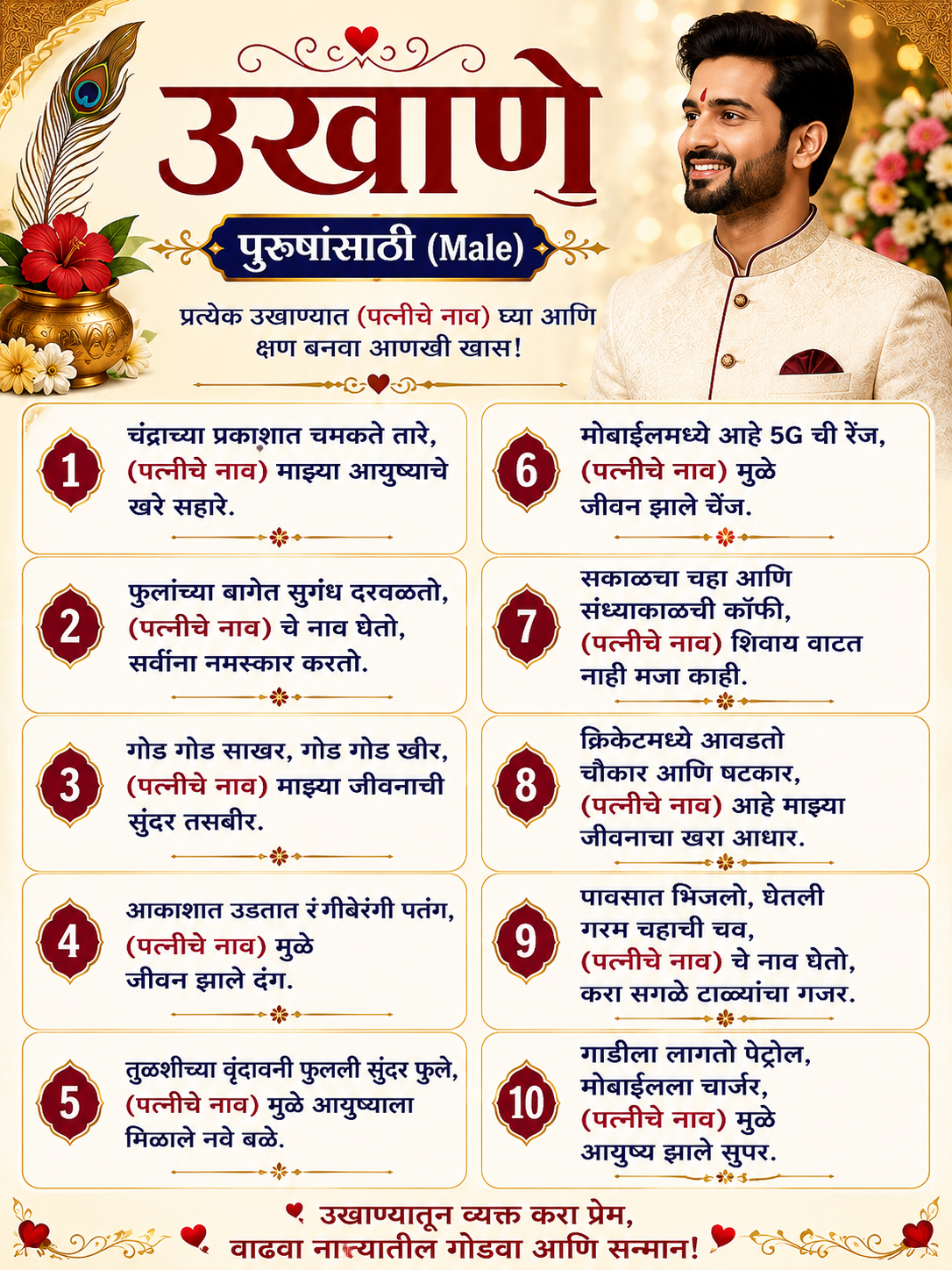
Ukhane are short rhyming verses traditionally spoken by married couples while including the name of their husband or wife in a respectful and poetic way. This custom is especially popular in Maharashtra and forms an important part of Marathi wedding traditions.
The verses are usually simple, easy to remember, and filled with creativity. They often include references to nature, festivals, family values, or everyday life while ending with the spouse’s name.
Reciting an ukhane is considered both a cultural practice and an enjoyable activity that brings smiles to everyone present.
History and Origin of Ukhane
The tradition of ukhane has been passed down through generations in Marathi households. In earlier times, it was considered respectful for wives not to mention their husband’s name directly. Instead, they expressed it beautifully through poetic verses.
Over time, husbands also began participating in this custom, making it a joyful tradition for both partners. Today, the practice continues to symbolize mutual respect, affection, and cultural pride.
Even with changing lifestyles, this centuries old custom remains an important part of Maharashtrian celebrations.
Importance of Ukhane in Marathi Culture
Ukhane are much more than entertaining poems. They represent love, respect, commitment, and family values.
During weddings and family functions, reciting these verses creates a cheerful atmosphere while strengthening emotional bonds among relatives and friends. Elders often encourage newly married couples to participate in the tradition as a way of preserving cultural heritage.
The custom also helps younger generations stay connected with the Marathi language and appreciate the beauty of traditional expressions.
Occasions Where Ukhane Are Used
There are many occasions where people enjoy reciting ukhane.
Wedding ceremonies remain the most popular event for this tradition. Newly married couples are often invited to recite verses before family members and guests.
Wedding anniversaries also provide an excellent opportunity to continue this meaningful custom. Other occasions include baby naming ceremonies, housewarming functions, religious festivals, family reunions, and cultural competitions.
Many schools and community organizations organize special programs where participants showcase their creativity through traditional ukhane.
Different Types of Ukhane
There are several styles of ukhane that suit different occasions and personalities.
Traditional ukhane focus on cultural values and are commonly used during weddings and religious ceremonies. Romantic versions express affection in a graceful and respectful manner.
Humorous ukhane are designed to entertain family members and often include clever wordplay. Modern versions combine traditional structure with contemporary themes, making them popular among younger generations.
Each style has its own charm while maintaining the cultural essence of the tradition.
Tips for Choosing the Right Ukhane
Selecting the right verse can make the occasion even more enjoyable.
Choose an ukhane that is simple and easy to remember. Practice it several times before the event to improve confidence and pronunciation.
Make sure the verse matches the tone of the ceremony. A traditional event may require a classic verse, while a family gathering allows for a humorous or creative approach.
Speaking clearly with confidence and a pleasant smile helps make the recitation more memorable.
How Technology Has Popularized Ukhane
The internet has made it easier than ever to discover and share traditional verses. Social media platforms, blogs, and mobile applications now offer thousands of creative ukhane for different occasions.
Families frequently share verses through WhatsApp messages, Instagram posts, Facebook updates, and digital greeting cards. Video platforms have also introduced the tradition to younger audiences through wedding highlights and cultural performances.
Technology has helped preserve this beautiful custom while making it accessible to people around the world.
Preserving This Timeless Tradition
As modern lifestyles continue to evolve, preserving cultural traditions becomes increasingly important. Families play a significant role in teaching younger generations about the value of ukhane.
Schools, cultural organizations, and community events also encourage participation through competitions and performances. These activities help keep the Marathi language vibrant while ensuring that traditional customs remain relevant.
Passing this tradition from one generation to the next strengthens cultural identity and creates lasting family memories.
Conclusion
The tradition of ukhane continues to be one of the most treasured aspects of Marathi culture. These poetic verses beautifully combine creativity, respect, and affection while adding joy to weddings, anniversaries, festivals, and family celebrations.
Whether recited in a traditional ceremony or shared through modern digital platforms, ukhane continue to bring people together and celebrate meaningful relationships. By learning, practicing, and preserving this timeless custom, families ensure that an important part of Marathi heritage continues to inspire future generations with love, laughter, and cultural pride.